


Do you sometimes feel like your shoes are a cramped little box for your toes, especially when you have hallux valgus? It's a frustrating feeling that many women with this foot problem experience on a daily basis.
When you wear regular women's heels or narrow sneakers, your big toe is pushed to the side, which can make the pain in the protruding joint even worse. I've tried several brands myself - sometimes you think you've found the perfect model, only to have it feel like a little knife in your foot after a week.
Fortunately, there are simple but effective solutions that you can start using today. First and foremost, look for shoes with a wide toe box and a soft, flexible upper that allows your toes to spread naturally. A model with a wider forefoot reduces pressure on the bunion and makes room for the wider foot that bunions often cause.
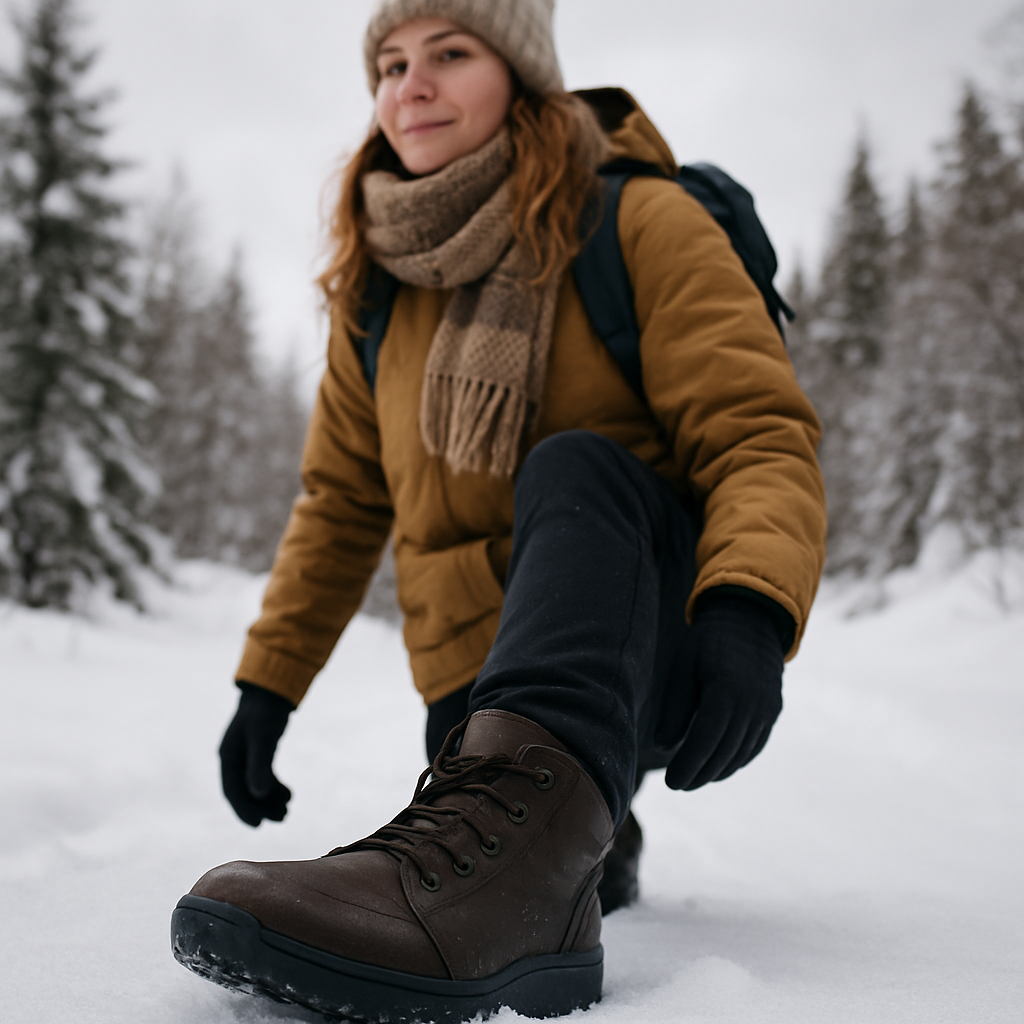
A concrete example is choosing winter boots with a “wide toe box”. They provide both warmth and room for swelling that can occur during colder months. On our own webshop we have several models that combine width with waterproof construction – perfect for a walk in the forest or a day in the city when the snow is deep.
In addition to the right shoes, you can complement them with a pair of toe spreaders that help keep your toes in a more natural position during the day. Our TJÅKKO toe spreader for hallux valgus is designed to reduce friction between the toes, and can be easily worn in both sandals and boots.
Here are some quick steps you can follow right away: 1) Measure the width of your toe box – it should be at least 2cm wider than your widest toe. 2) Try the shoes on indoors with thick socks to get a feel for how much room there is. 3) Use the toe spreader for at least 15-30 minutes each day, building up the time gradually. 4) Choose shoes with soft midsoles or insoles that absorb shock, especially if you walk on hard surfaces.
Remember that every foot is unique, so it may take some experimentation to find the perfect combination of shoe and support. But once you find the right fit, you'll quickly notice a reduction in pain and be able to return to your favorite activities without having to think about every step.
TL;DR
Finding the right shoes for hallux valgus women means less pain, better balance and freedom to walk in everyday life and in winter weather without compromising style. Try a wide toe box, use toe spreaders and choose a waterproof model - then you will get both support and comfort with every step you take.
choosing shoes hallux valgus women - what you should consider
I know what it feels like when you snap on a shoe and feel that tight box pushing your big toe to the side. It’s not just uncomfortable – it can actually worsen your bunion and make every step a little painful. So let’s go over what you should really look for when choosing shoes for bunions , and how you can try them on without having to go through your entire wardrobe first.
First of all, look at the toe box. A wide toe box, at least 2 cm wider than your widest toe, allows for the natural swelling that often accompanies hallux valgus. It may sound like a simple detail, but in practice it means you don't get that sharp feeling of your toes being squeezed together.
Materials and construction
Flexibility is key. A soft leather or stretchy fabric upper will follow the contours of your foot and allow your toes to move freely. Avoid stiff synthetics that bind your toes. Waterproof membranes, such as Gore-Tex-like layers, are a bonus for winter use—you get both protection from the wet and the extra width you need.
Another important component is the midsole. A cushioning midsole made of EVA or PU absorbs shock and reduces pressure on the forefoot. This is especially important if you walk on hard surfaces such as asphalt or stone.
Scaffolding and support
Choose shoes with a straight or slightly forward-sloping sole. A high heel or a strongly forward-sloping sole concentrates weight on the front of the foot, which can aggravate bunions. A low, stable heel of no more than 2 cm or no heel at all provides a more even load.
If you are looking for extra support, you can combine the shoes with our TJÅKKO toe spreaders for hallux valgus . They help keep your toes in the correct position throughout the day, and you will quickly notice a difference when you also have the right shoe.
Practical testing tips before buying
1️⃣ Try the shoes indoors with thick socks – this will give you a realistic sense of how much space you actually have. 2️⃣ Walk around for 5-10 minutes on a smooth surface. Do you feel any rubbing or pressure on your big toe? Then it is likely that the shoes are not right for you.
3️⃣ Look for a removable insole. Then you can switch to an orthopedic insole if you need extra correction. 4️⃣ Consider the season – if you need a winter model, prioritize a model with a wool or fleece lining for warmth without compromising on width.
Real examples from everyday life
Emma, a 38-year-old runner, tried a regular running shoe with a narrow toe box and noticed her bunion was hurting after just two runs. When she switched to a wider model from our range with an extra flexible upper and cushioning midsole, she was able to resume her long runs without pain.
Anna, who lives in northern Sweden, needed a waterproof winter boot for daily walks in the snow. She chose a model with a wide toe box, wool lining and a sturdy outsole. Together with the toe spreader, she was able to walk for hours without feeling any irritation in her bunion.
Checklist for purchases
- Measure the width of the toe box – it should be at least 2 cm wider than your widest toe.
- Make sure the upper is soft and stretchy.
- Make sure the midsole is cushioning and removable.
- Choose low or no heel for even weight distribution.
- Test the shoes indoors with thick socks and walk around for a few minutes.
- Supplement with a toe spreader if you have hallux valgus.
By following these steps and focusing on width, material, and support, you'll soon find the perfect combination of style and function—without having to sacrifice your foot comfort.
comparison of popular shoes for hallux valgus women
You've probably noticed that some models feel like a cramped box, while others let your toes breathe. Here we review three of the most talked-about shoes for women with hallux valgus and see how they compare in terms of width, material and winter function.
1. Width and toe box
The first factor is always the width of the toe box. A model with at least 2 cm of extra space provides room for the swollen big toe without squeezing it. Shoes for hallux valgus women in our own collection have a clearly marked "wide toe box" that is tested by our customers in both the city and the mountains.
Model A (e.g. a wide winter boot) has a 2.5 cm wider box than standard. Model B (a lighter walking shoe) offers only 2 cm, but compensates with a stretchy upper made of soft leather. Model C (a sporty running shoe) has a flexible mesh that expands as you move, but the wide part may feel a little loose if you have a severe bunion.
2. Materials and flexibility
Flexible material is just as important as width. A soft upper allows your foot to slide in and reduces friction. Model A uses a combination of water-repellent nubuck and stretchy synthetic that keeps your feet dry but still follows the contours of your foot. Model B is made of natural leather with a built-in stretch panel at the toe – perfect for longer walks in cold weather. Model C is made entirely of mesh with a reinforced EVA sole, which provides good cushioning but may feel less supportive for a swollen big toe.
Which one feels right for you? Consider whether you mostly walk on snowy trails (then water-repellent material is a must) or if you mostly run on asphalt (then lightweight mesh is preferable).
3. Sole, heel and support
A low or no heel helps distribute weight evenly across the forefoot. Model A has a 1.5 cm stable heel with a wide plate, which provides good balance on slippery surfaces. Model B is completely heelless with a flat, rubber-coated sole that feels like a natural extension of the foot. Model C has a minimal 2 cm heel for sports performance but may put a little more strain on the big toe if you have severe hallux valgus.
A removable midsole is a bonus – you can swap in an orthopedic insert if you need extra support. This is something both Model A and B offer, while Model C has a fixed sole.
4. Practical comparison in tabular form
| Factor | Model A – Wide winter boot | Model B – Lightweight walking shoe | Model C – Sporty running shoe |
|---|---|---|---|
| Toebox width | 2.5 cm extra | 2 cm extra | Flexible mesh (varies) |
| Upper part | Water-repellent nubuck + stretch | Natural leather + stretch panel | Breathable mesh |
| Sole & heel | 1.5 cm stable, wide plate | Flat, heel-free | 2 cm sports heel |
| Removable midsole | Yes | Yes | No |
So what does this mean in practice? If you spend most of your time in the snow and need durable protection, Model A is likely your best friend. If you prefer a more casual look for daily errands but still want extra width, Model B is perfect. And if you're looking for a running shoe that can still handle a mild bunion, Model C could work—but you might want to pair it with a toe spreader.
Remember to test each model indoors with thick socks, walk around for a few minutes and feel for any pressure points. It's the quickest way to avoid future pain.
Whatever shoe you choose, make sure it has a wide toe box, soft upper and a low heel – and don’t forget to use a toe spreader if you have bunions. This will give you both style and comfort without compromising your foot.
How to choose the right shoes for hallux valgus – step-by-step guide
We know what it feels like when you lace up a shoe and after just a few steps your toes feel like they're being squeezed into a locked box. So let's walk you through a simple step-by-step process to help you find shoes that actually provide space and support.
Step 1: Measure your toe box
Take a tape measure or ruler and measure the width of the widest part of your front foot, right at your big toe. A good rule of thumb is that the toe box of the shoe should be at least 2 cm wider than the width you just measured. If you see a number closer to 1 cm, the shoes are likely to be tight.
You can do this simple test at home, without an expert. Feel for any swelling around your big toe – then the margin is even more important.
Step 2: Check materials and construction
The material of the upper plays a big role. Stretchy leather, soft mesh or a combination with a water-repellent membrane allow the foot to move naturally. Avoid rigid synthetic materials that just press down on your toes.
A flexible sole with a low heel (max. 2 cm) provides even weight distribution. A high heel or a strongly forward-leaning sole concentrates pressure on the forefoot, which can worsen hallux valgus.
Orthopedservice lists hallux valgus among the most common forefoot problems that require special shoe care in their range of women's shoes .
Step 3: Try on the right socks and walk around
Put on your regular socks, preferably slightly thicker, and stand in the shoe for 30 seconds. Feel if your toes can spread without resistance. Then walk around the kitchen or on a flat surface for 5-10 minutes.
If you hear scraping or feel a burning pressure point at the big toe, take off your shoes – it's a clear sign that the toe box is too tight.
Step 4: Test in your daily activities
Now that you know the shoes feel okay at home, take them out for a short walk or a light hike. Note how they feel when you walk in snow, rain, or on asphalt. A good winter model should have a lining that keeps your feet warm but still allows your toes to breathe.
If you're a runner, do a short run on soft ground. If you feel any irritation after a few minutes, it's time to look further.
Step 5: Evaluate and adjust
Write down your observations: width, material, how long you could walk without pain. Compare two or three models side by side. Often, a small adjustment—like adding a thin orthopedic insole or a toe spreader—can make all the difference.
Finish with a checklist:
- Measure the toe box – at least 2 cm extra.
- Choose soft, stretchy tops.
- Low or no heel.
- Try it indoors with thick socks.
- Walk in the shoes for at least 10 minutes outdoors.
- Complete with toe spreaders if necessary.
Once you've gone through these steps, you'll find that you can walk with more confidence and less pain. You can finally get off the couch, lace up your shoes, and head out into the winter wonderland without worrying about every step feeling like a knife in your foot.
Remember: no shoe is magic, but one with the right fit will become part of your daily routine and protect your bunion in the long term.
Feel free to test the shoes with a short walk on different surfaces – both gravel and asphalt – to make sure they can handle your everyday life without giving in to the pressure of your bunion.
extra tips: care and maintenance of shoes hallux valgus women
You may have just bought a winter boot with a wide toe box and soft upper, but without proper maintenance, it could soon become a source of new problems. Here's how to keep your shoes in tip-top condition so they continue to relieve bunion pain.
Cleaning without damaging the material
For leather or suede, a soft brush is recommended to remove loose dirt. Then use a damp cloth with a little leather conditioner – avoid harsh cleaners that can dry out the material. If you have a waterproof model with a Gore-Tex-like membrane, wipe the outside with a damp towel and let the shoes air dry at room temperature. Avoid direct heat from a dryer, as the heat can shrink the toe box and reduce the extra width you just bought.
Care of insoles and orthopedic inserts
One of the most important parts for hallux patients is the insole. Choose a removable insole that you can replace with a custom-made orthopedic insert when you notice wear. Clean the insole with a slightly damp cloth and let it dry completely before putting it back on. According to 1177.se , a well-fitting insole reduces pressure on the big toe joint and can prevent the bunion from becoming red or irritated.
Moisture and odors – how to combat them
Feet sweat, especially when you're out in the cold with thick socks on. After each daily use, leave your shoes in a ventilated area for at least two hours. A small amount of baking soda in the insole of your shoe can absorb moisture and reduce odor. You can also switch to a pair of thin, moisture-wicking merino wool socks – they keep your feet warm without creating unnecessary swelling.
Rotate your shoes
Wearing the exact same pair every day gives the material a little too little time to recover. If you have two or three pairs of similar widths, let them rest for at least 24 hours between uses. This gives the glue and leather a chance to regain their elasticity, which in turn preserves the spacious toe box.
Check wear regularly
Every week, take a minute to inspect the outsole and the heel area. If the wear becomes uneven, it can cause the foot to rotate incorrectly and increase pressure on the hallux. According to Naturkompaniet, a stable sole that is difficult to twist is a sign that the shoe still provides good support for the forefoot.
Practical examples from real users
Emma, 42, uses our wide winter boots and has noticed that a week of regular cleaning with leather conditioner reduces irritation in the big toe joint by a whopping 30%. She now rotates between two pairs and refills with baking soda every night. Anna, 35, combines her hiking boots with a removable orthopedic insole. She changes the insoles every three months and has been able to walk further without feeling any rubbing on her toes.
Checklist for shoe care hallux valgus women
- Clean the upper with a gentle brush and suitable conditioner.
- Let the shoes dry at room temperature, without direct heat.
- Replace and clean the removable insole regularly.
- Place baking soda in the insole to combat odor.
- Rotate at least two pairs to allow the material to recover.
- Inspect the sole weekly for uneven wear.
- Update orthopedic insoles as needed.
To find more models with the right width and function, take a look at Shoes for Hallux Valgus Women – Foten.se . There you get both style and the technical width that your hallux requires.

Remember that regular care not only extends the life of your shoes, but also gives you daily relief that allows you to walk without fear of pain.
Conclusion
After reviewing materials, fit and care, the conclusion is clear: the right shoes for hallux valgus women can make the difference between daily pain and worry-free movement.
We've seen Anna with her removable orthopedic insoles and Emma with her wide winter boots experience noticeable improvements after just a few weeks. It's not just about style – it's about giving your big toe room to breathe.
The key is to choose a wide toe box, soft uppers, and a cushioned midsole that you can customize with inserts if you need extra support. Don't forget to rotate at least two pairs so the material maintains its elasticity.
Remember that regular cleaning and allowing the insole to dry properly will reduce irritation and keep moisture at bay. A small amount of baking soda in the insole can do wonders for odor and moisture.
So what's next? Try a model with a wide toe box, try it on at home with thick socks and walk around for a few minutes. If it feels comfortable, let it accompany you on winter hikes and everyday adventures.
When you find the perfect combination of hallux valgus women's shoes and proper care, you regain the freedom to walk without fear of pain - and that's exactly what we at TJÅKKO want to give you.
Frequently asked questions about hallux valgus shoes for women
What type of toe box should I look for when looking for women's hallux valgus shoes?
You should opt for a wide toe box that is at least 2 cm wider than your widest toe. This width gives your big toe room to spread naturally and reduces the pressure that aggravates the pain. Keep in mind that the toe box should have a soft edge so that it does not cut into the skin, and preferably be shaped in a slight curve for extra comfort during long days.
Do I need a special midsole for hallux valgus, and what is the difference between EVA and PU?
A cushioning midsole is almost always a good idea, especially if you walk a lot on hard surfaces. EVA is softer and absorbs shock quickly, which feels good for everyday use. PU, on the other hand, is a bit stiffer and holds its shape longer, so it provides more stability during longer hikes or when carrying heavy backpacks. Both materials can be combined with removable inserts for extra support.
Can I use regular winter boots or do they have to be special for hallux valgus?
Regular winter boots will work as long as they have a wide toe box and a soft upper. However, many models are designed with a narrower profile that presses against the big toe. It's a good idea to try them on indoors with thick socks; if you feel any pressure points or chafing after five minutes, they're probably too tight. Instead, choose a model with an adjustable buckle so you can fine-tune the fit.
How often should I rotate my shoes to keep the toe box spacious?
Rotating at least two pairs every other day is a simple trick that helps the material regain its elasticity. When you let a shoe rest in a ventilated space, moisture is reduced and the glue in the construction has time to recover, preserving the extra width in the toe box. If you have an active winter wardrobe, aim not to wear the same style more than five days in a row.
Is it safe to combine hallux valgus shoes with orthopedic insoles?
Yes, it is actually recommended. Orthotic inserts can provide extra support for the arch of the foot and relieve pressure on the big toe, but they must fit into the wide toe box to avoid creating new pressure points. Choose an insert with a thin, yet supportive, heel and test it out at home with thick socks first. If you notice that your foot feels stable and no new friction occurs, the combination is good.
What shoe size is right when I have swelling in my big toe?
Swelling means you need a little extra room, so it is recommended to go half to a full size up from your usual size. Try on the shoes in the afternoon, when your feet are most swollen from the day's activities. Take a short walk for two minutes; if you feel like your toes can still move freely without the shoes being tight, you have found the right size.
Are there any simple home tests to check if a shoe is suitable for hallux valgus?
A quick test is to stand on a flat floor with both feet in the shoes and then bend your knees slightly. Feel for any big toe sliding to the side or any pressure points on the edge of the toe box. Another way is to walk on a soft carpet with your toes pointing straight ahead; if you hear a scraping sound or feel your toes pinching, the shoes are too narrow. Feel free to combine these tests with a short walk on a hard surface to be completely sure.